app market
The app market is a massive digital world that is constantly growing and changing. In 2026, it is no longer just about having a simple tool on your phone. Instead, it has become the central hub for how we live, work, and play. From the moment we wake up to an alarm app to the time we order dinner through a delivery service, mobile applications are everywhere.
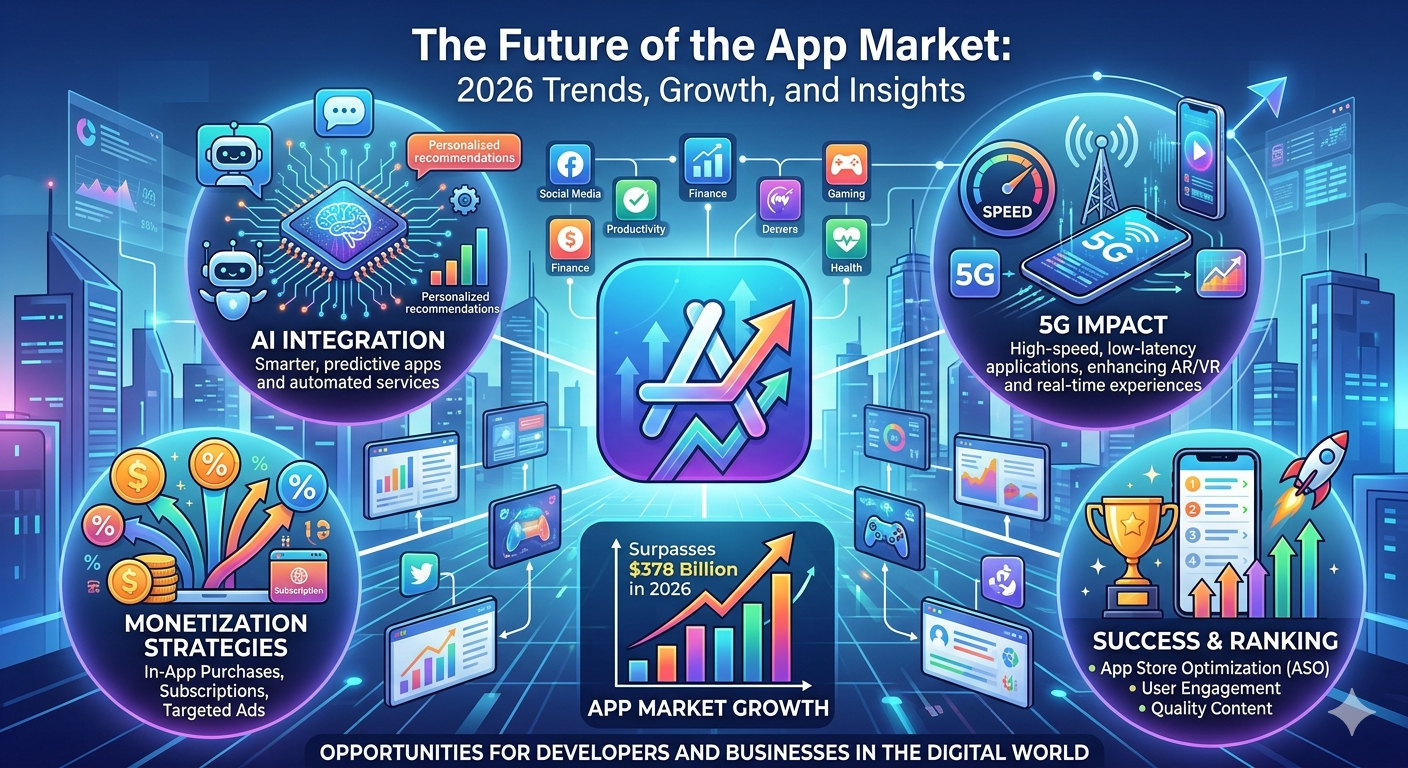
Experts estimate that the global app market size will reach over $378 billion this year. This growth is driven by better internet and smarter phones. People are spending more time than ever inside their favorite programs. On average, a person spends over three hours a day using various apps. This makes it a land of big opportunities for developers and businesses alike.
Key Statistics for the App Market in 2026
To understand the app market, we need to look at the hard facts. Data helps us see where the money and the users are moving.
| Metric | Estimated Value for 2026 |
| Global Market Size | $378 Billion |
| Total App Downloads | 292 Billion |
| Average Time Spent | 3.5 Hours Per Day |
| Leading Category | Mobile Gaming (38% share) |
| Top Growth Region | South America |
| AI Integration Rate | 40% of Enterprise Apps |
How AI Is Changing the App Market
Artificial Intelligence (AI) is the biggest story in the app market right now. It is not just a fancy buzzword anymore. In 2026, AI is built into the very core of how apps function. This is often called “Embedded Intelligence.”
Imagine a fitness app that doesn’t just track your steps but actually predicts when you feel tired. It can then suggest a lighter workout or a healthy snack. This kind of personalization makes users stay longer and enjoy the experience more. Generative AI is also helping people build apps faster using “low-code” tools. This means you don’t need to be a computer genius to create something great for the app market.
The Rise of Super Apps and Ecosystems
We are seeing a shift in the app market toward “Super Apps.” Instead of having fifty different icons on your screen, users want a few powerful apps that do everything. A single super app might handle your text messages, your bank account, and your grocery shopping all at once.
This trend is very popular in Asia and is now moving to the West. For a business, the goal is to become a “core four” app. This means being one of the four apps a person uses every single day. In the crowded app market, staying relevant is all about making the user’s life easier by offering many services in one place.
Why 5G and 6G Matter for Mobile Apps
Speed is the backbone of the app market. With the wide rollout of 5G and early talks of 6G, apps are becoming lightning-fast. This high-speed internet allows for things that weren’t possible a few years ago, like high-quality Augmented Reality (AR).
For example, you can now use a furniture app to see exactly how a new sofa looks in your living room through your camera lens without any lag. This “immersive commerce” is a huge part of the modern app market. When apps work without delay, users are much happier and more likely to spend money.
Understanding App Market Monetization
How do apps actually make money? In the current app market, the “Freemium” model is king. This is where the app is free to download, but you pay for extra features or subscriptions.
Subscriptions are growing faster than one-time purchases. People are more willing to pay a small monthly fee for a service they trust. Whether it’s a streaming video service or a specialized health tracker, recurring revenue is the goal for most players in the app market. Advertisements are still common, but they are becoming more “native” and less annoying to the user.
The Importance of Privacy and Security
In the modern app market, trust is everything. Users are very careful about who they give their data to. If an app feels “creepy” or asks for too many permissions, people will delete it instantly.
To rank well and keep users, an app must show it follows strong security rules. This includes being transparent about how data is used. In 2026, “Sustainable Design” is also a big deal. This means making apps that use less battery and less data. This is not just good for the planet; it makes the app feel “light” and fast, which is a major win in the app market.
Regional Trends: Where Is Growth Happening?
While the United States and China are still leaders, the app market is exploding in new places. India, Brazil, and Indonesia are seeing millions of new users every month.
In these emerging markets, many people use Android devices and third-party app stores. If you want to win in the global app market, you cannot just focus on the Apple App Store. You have to think about different cultures, languages, and even different internet speeds. This process is called “Localization,” and it’s about much more than just translating words.
Gaming: The Powerhouse of the Market
If the app market was a kingdom, Gaming would be the king. Games make up about 38% of all revenue in the mobile world. From simple puzzle games to massive multiplayer battles, people love to play on their phones.
Cloud gaming is the next big thing. This allows you to play high-end games that usually need a powerful PC right on your smartphone. Because the processing happens in the “cloud,” your phone doesn’t get hot or slow down. This technology is opening up the app market to even more players who want premium experiences on the go.
How to Rank Your App in 2026
To be number one in the app market, you need more than just a good idea. You need “Topical Authority.” This means Google and other search engines see you as an expert in your field.
You should focus on User Intent. Don’t just pick random keywords; find out what problems your users are trying to solve. Use NLP (Natural Language Processing) keywords that sound natural. If you write about a fitness app, mention things like “calorie tracking,” “heart rate,” and “workout plans.” This helps the search engines understand your content better and rank you higher in the app market.
Conclusion
The app market is a fast-moving train, and it shows no signs of slowing down. By focusing on AI, speed, and user trust, anyone can find success in this digital space. Remember to keep your content “people-first” and always look for ways to add real value.
The most successful apps in 2026 won’t just be the ones with the most features. They will be the ones that build a community and solve real problems. Whether you are a developer or a business owner, staying informed about the app market is the first step toward reaching the top of the search results.
Frequently Asked Questions
1. Is the app market still growing in 2026? Yes! The market is growing at a rate of over 14% each year. More people are getting smartphones, and existing users are spending more money on subscriptions and in-app purchases.
2. What is the most popular type of app? Gaming remains the most popular and profitable category. However, health, education, and business apps are also seeing very fast growth this year.
3. How much does it cost to put an app on the market? The cost varies. Apple and Google both charge fees to host your app. Additionally, you need to budget for development, security checks, and marketing to make sure people can actually find your app.
4. Can I build an app without knowing how to code? Absolutely. Thanks to AI-powered “low-code” or “no-code” platforms, you can build a basic app by dragging and dropping elements. This has made the app market much more accessible.
5. Why is AI so important for apps now? AI helps make apps smarter. It can offer personal advice, automate boring tasks, and even help with security. Apps with AI usually have much better user retention.
6. What is a “Super App”? A Super App is a single mobile application that offers many different services, like shopping, banking, and messaging, all in one place. It is a major trend in the current app market.
About the Author